Comparison between Manuka Honey and Stingless Bee Honey
Content
Introduction
Raw honey has a long history of usage in medicine and offers a number of health advantages. Even some hospitals utilise it as a wound therapy. In general, all authentic honeys are good and they have benefits. Here are some health advantages of raw honey: a reliable source of antioxidants; nutritional value of raw honey; characteristics that are antibacterial and antifungal; heals injuries; powerful source of phytonutrients; support for stomach problems.; cure a cough and sore throat; brain benefits.
Manuka Honey
Manuka honey comes from the flowers (plants) that the bees have collected as nectar. Manuka honey is basically collected by Apis bees. Manuka honey contains active ingredient (compound) called as dihydroxyacetone. At the same time, they collect wax to build the comb in which the honey is kept. After some time, the compound in honey will convert to methylglyoxal. Manuka (honey) has an active compound that can help wound healing. Non-peroxide activity of Manuka honey gives a special antiseptic property.

Stingless Bee Honey
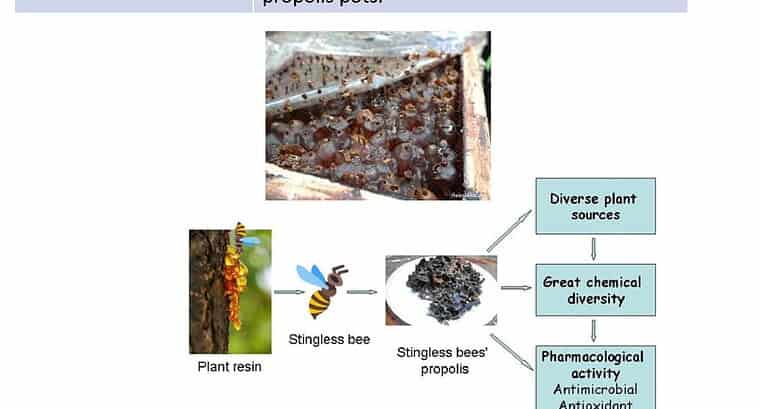
Meanwhile, a stingless bee is a resin-based bee. They collect mostly resins and mixed it with wax to make the propolis pots. Both resin and wax are plant materials. There are many types of resins that can be rubbery or crystalize (like amber). Stingless bees collect tree resin, mixed with beeswax and bees’ saliva. The bees take that back to the hive and they mix it all up and build their honey pots out of it. Many of those propolis-derived characteristics permeate the honey when it is kept in the honey pot. Stingless bees also collect plant pollens and fill it into the pots to make the bee bread.

Stingless
Propolis is full of Flavonoids and Phenolic compounds (acids/antioxidants). Flavonoids and Phenolic are good for internal healing. Manuka honey if taken 200 ml every day, can result in diabetes while stingless bees honey contained Tetrahulose. Trehalulose is a rare sugar with a low glycaemic index (GI). It has a low glycaemic index, which suggests that stingless bee honey contributes to more stable blood sugar levels (relative to sucrose, glucose, or starch) if consumed properly. This is particularly crucial for managing diabetes. Big companies try to synthesis Tetrahulose because it is a better alternative of sweetener and for other proposes.
Bibliography
- Popova, M., Trusheva, B., & Bankova, V. (2019). Propolis of stingless bees: A phytochemist’s guide through the jungle of tropical biodiversity. Phytomedicine, 153098.
- Fletcher, M. T., Hungerford, N. L., Webber, D., Carpinelli de Jesus, M., Zhang, J., Stone, I. S. J., Blanchfield, J. T., & Zawawi, N. (2020). Stingless bee honey, a novel source of trehalulose: a biologically active disaccharide with health benefits. Scientific reports, 10(1), 12128. https://doi.org/10.1038/s41598-020-68940-0.