Detection of imidacloprid and deltamethrin pesticide residues in honey produced by Apis mellifera and Tetragonula laeviceps
Nadzirum Mubin et.al.
Department of Plant Protection, Faculty of Agriculture, IPB University, Indonesia
IOP Conf. Series: Earth and Environmental Science 1133 (2023) 012029
Key research conclusions:
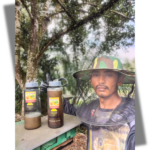
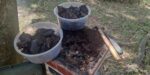
Pesticides are chemicals or biological agents that farmers use to control pests. However, pesticides can also contaminate agricultural products and other commodities. This study investigated the contamination of honey from four beekeeping operations in Java with two active ingredients of pesticides, imidacloprid and deltamethrin. Honey samples of 250g were collected from honeybee (Apis mellifera) and stingless bee (Tetragonula laeviceps) beekeeping operations in Blora-Central Java, Subang-West Java, Sumedang, and Banten, West Java. Residue analysis was performed using the LC-MS/MS method at Saraswanti Indo Genetech, Bogor. The beekeeping operations were located between 500 and 1000 meters from cultivation plants, such as chili, shallot, and rice.
The results of the residue analysis showed that no active ingredients were detected in the honey samples, or the levels of the detected active ingredients were below the limit of detection (LOD). The LODs were also below the maximum residue limit (MRL) for imidacloprid (0.05 mg/kg) and deltamethrin (0.03 mg/kg). Therefore, the honey from the beekeeping operations was safe for consumption.

These findings suggest that the bees did not collect contaminated nectar from crops, even though the beekeeping operations were located near crops. This is good news for the future of stingless bees, as it suggests that they are not as vulnerable to pesticide contamination as previously thought. However, more research is needed to confirm these findings and to investigate the impact of pesticides on stingless bees in other parts of the world.
Significance of the study
This study is significant for the future of stingless bees because it provides evidence that they are not as vulnerable to pesticide contamination as previously thought. This is important because stingless bees are important pollinators and their decline could have a significant impact on food security. More research is needed to confirm these findings and to investigate the impact of pesticides on stingless bees in other parts of the world.
- Learning Together Through Stingless Bees at KDOJ: Sustainability, Innovation and Internationalisation at Home
- Apa itu Madu kristal ?
- ✨ PEMPROFILAN KEKAL BERSAMA KOMUNITI FELDA TENGGAROH, MERSING
- Perkembangan Terkini Sistem Pengesanan & Pengiraan Kelulut
- Senarai Kursus/Seminar Kelulut Tahun 2026 (Fizikal & Online)