Exploring the World of Stingless Bees: A Comparative Study of Tetragonula Carbonaria and Trigona Thoracica flight range

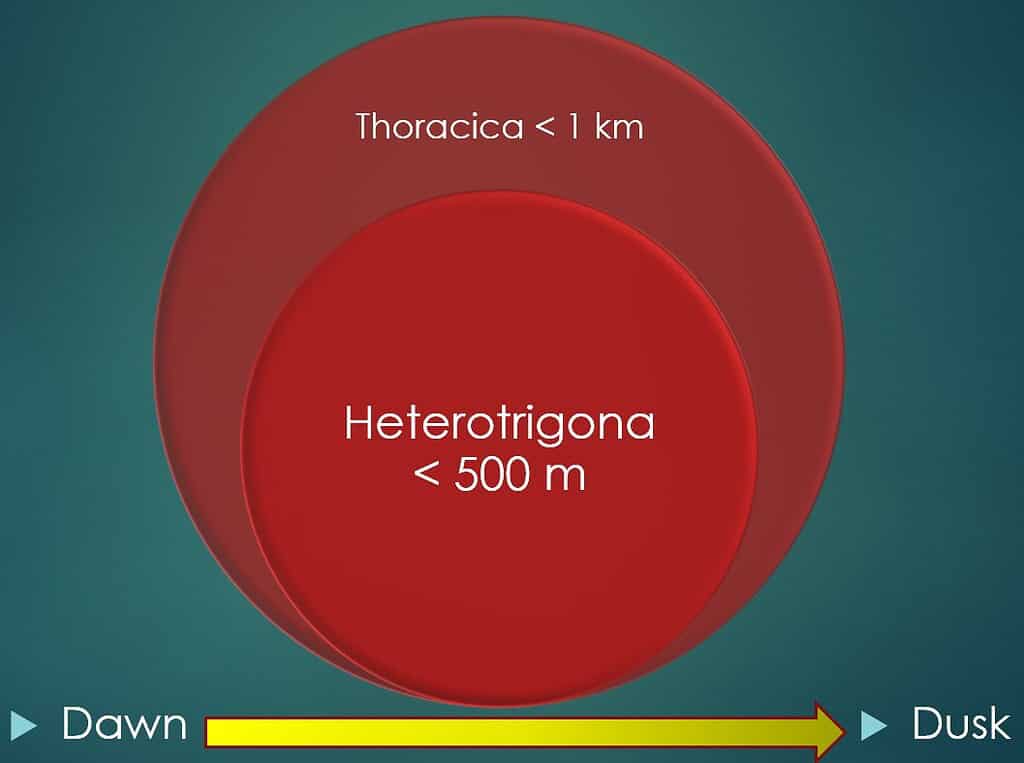
Did you know that the flight range of native stingless bees in Australia is only about 500 meters? Recent research from the University of Sydney has shown that this is the typical distance that these bees will fly in search of resources. This information is crucial for beekeepers, as it helps them determine the best location for their hives based on available forage. It is also essential when moving hives, as bees will return to their old location if it’s within their flight range. The study was conducted on the Tetragonula carbonaria species, which is commonly kept in Australia. While other species may have slightly different flight ranges based on their size, the findings are still significant. The research team marked forager bees and released them at increasing distances from their hive, ultimately finding that the typical homing range for these bees was around 333 meters, with a maximum returning range of 712 meters.
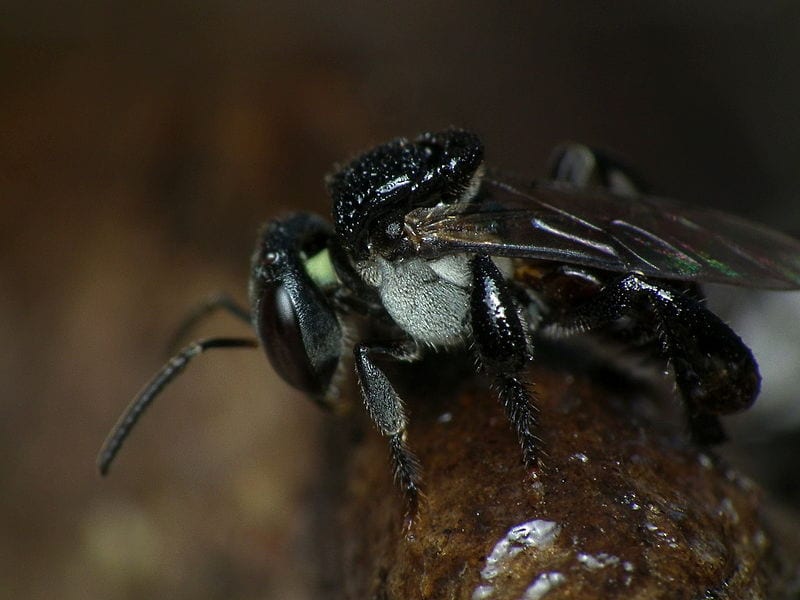
While in other studies, the flight range of Trigona thoracica can vary depending on various factors such as the availability of food, the density of the population, and the size of the nest. However, studies have suggested that the typical foraging range of T. thoracica is between 500 to 1000 meters from the nest.
Tetragonula carbonaria and Trigona thoracica are both species of stingless bees, but they have some differences in their characteristics.
1. Size: Tetragonula carbonaria is a relatively smaller stingless bee species than Trigona thoracica. The worker bees of T. carbonaria can reach up to 5 millimeters in length, while the worker bees of T. thoracica are typically around 8.44 millimeters in length.

2. Nest structure: Both species of bees create their nests using wax and resin, but Trigona thoracica is known for using propolis to construct their nests, while Tetragonula carbonaria does not use propolis. Tetragonula carbonaria creates their nests using wax and resin. Propolis is a resinous material collected by bees from trees, buds, and other plant sources. It is mixed with beeswax and other secretions to create a sticky, hard substance that is used to seal gaps and cracks in the hive, as well as to coat the interior of the nest. Propolis has antimicrobial properties and is thought to help protect the hive against pathogens.
Beeswax and resin, on the other hand, are used by bees to create the structure of the Tetragonula carbonaria hive. Beeswax is produced by the bees themselves and is used to build the hexagonal cells in which the bees store honey and raise their young. Resin is collected by bees and used to seal the hive and to line the cells where the queen lays her eggs.
3. Defensive behavior: Trigona thoracica is known for their less aggressive defense of their nests and less likely to attack if their nest is threatened. On the other hand, Tetragonula carbonaria is generally ,ore aggressive.
4. Geographic distribution: Tetragonula carbonaria is the most commonly kept stingless bee species in Australia, while Trigona thoracica is found in Southeast Asia, including countries such as Thailand, Malaysia, and Indonesia.
5. Pollination: Both species of bees are important pollinators of crops, but Trigona thoracica has been found to be a particularly effective pollinator of coffee and rubber trees.
Comparing the flight range of native stingless bees to honey bees is also fascinating. Honey bees are known to forage much further from the hive, with a maximum sustainable foraging range of about 6.4 kilometers, or over twelve times that of native stingless bees. This emphasizes the importance of hive placement for stingless beekeepers, and the incredible ability of honey bees to find food sources far from their hives. Overall, both Tetragonula carbonaria and Trigona thoracica are important species of stingless bees, but they have some differences in their size, nest structure, defensive behavior, geographic distribution, and pollination.
Bibliography:
[1] Heard, T. A. (1999). The Australian native bee book: keeping stingless bee hives for pets, pollination and sugarbag honey. Sugarbag Bees.
[2] Hogendoorn, K., & Velthuis, H. H. (1995). Flight range and wing wear of workers of the stingless bee Trigona carbonaria. Ecological entomology, 20(2), 111-118.
[3] Wongsiri, S., & Chanchao, C. (2009). The nesting biology of the giant honey bee Apis dorsata in Thailand. Journal of Apicultural Research, 48(1), 15-21.
[4] Roubik, D. W., Sakai, S., & Hamid, A. A. (1986). Seasonal pollinator activity and flower resource utilization by an Indonesian stingless bee, Trigona laeviceps Smith (Hymenoptera: Apidae). Environmental entomology, 15(6), 1134-1140.
Cabaran-cabaran yang dihadapi oleh Usahawan Penternakan Lebah Kelulut dan Cara-cara Mengatasinya

Kandungan 1) Pengenalan. 2) Gangguan Fizikal. >>>> Assasin Bug. >>>> Black Soldier Fly ( BSF ). >>>> Kumbang pendebunga (Haptoncus luteolus). >>>> Lalat Forid. >>>> Kupu-kupu Lilin. >>>> Semut dan kerengga. >>>> Anai-anai. >>>> Mengkarong dan Cicak. >>>> Monyet dan Kera. >>>> Burung pemakan kelulut. >>>> Kecurian Sarang Kelulut oleh Manusia. 3) Faktor Musim 4)…
Apa itu Madu kristal ?

Madu kristal (atau dalam istilah saintifik disebut crystallized honey) merujuk kepada madu yang telah berubah bentuk daripada cecair likat kepada keadaan pepejal atau separa pepejal yang berbutir-butir. Ramai orang tersalah anggap madu yang mengkristal adalah madu tiruan atau madu yang dicampur gula pasir, padahal ia adalah fenomena semula jadi yang membuktikan madu tersebut adalah madu…
✨ PEMPROFILAN KEKAL BERSAMA KOMUNITI FELDA TENGGAROH, MERSING

📅 7 Februari 2026 Salam SejahteraSalam UTM Sanjungan Bangsa Pada 7 Februari yang lalu, sekumpulan pelajar UTM — majoritinya daripada pelajar Assasi UTM dan JKP — telah menyambung langkah program KEKAL ke Felda Tenggaroh, Mersing. Kami bertolak dari Blok A, KLG UTM seawal pagi dengan satu misi mudah tapi besar maknanya: buat pemprofilan komuniti dan…
Perkembangan Terkini Sistem Pengesanan & Pengiraan Kelulut

Sipnosis Sistem AI menjejak lebah kelulut di pintu masuk (corong) sarang melalui pemprosesan rakaman video telah berjaya dihasilkan dengan kejituan yang tinggi. Setiap lebah dikesan oleh model YOLO (kotak hijau) dan diberi ID unik melalui DeepSORT, manakala zon penampan berwarna kuning menandakan kawasan pengiraan keluar-masuk lebah. Apabila seekor lebah melintasi zon ini menuju ke dalam…